One of the earliest adaptations of Charles Dickens' Great Expectations was directed by David Lean in 1946. It starred Anthony Wager as Pip, Finlay Currie as Magwitch, Jean Simmons as Estella and Martita Hunt as Miss Havisham. The character's appearances in this film do not change as obviously or drastically as some of the more modern movies but I still found this adaptation extremely interesting to see a more simplistic design for Miss Havisham.
At this point in Martita Hunt's career, she would've been around 50 herself so there was not much need for any drastic ageing makeup effects. Throughout the film it seems as though her face was heavily powdered which gave her skin a chalky look, almost adding to the dust-infested environment surrounding her. Although not completely historically accurate, the eyebrows are quite heavily drawn on which fits more so in with the trends of the decade. This adds a more stylistic approach as it is incorporating the trends of the time with a period drama. As well as that, the hairstyle does not correspond with the styles of the Victorian era but shows the distressed and uncoordinated aspect of Miss Havisham's character. Overall, this design of Miss Havisham is a very interesting one to me as it takes a different view on how she can be interpreted. Although it not is very historically accurate, the dramatic aesthetic the makeup designer chose to create adds a more theatrical element to the film. This adaptation allows me to explore how subtle or crazy I want to make my design!
Section pieces of hair horizontally to the same length as the roller that is being used and roll into piece and pin.
Repeat this 4 times on top of hair, all roller going the same way
Use same rollers but vertically to heat up hair above the ears
While hair in setting in the rollers, section the back half of the hair into two sections
Use to top section to create a bun - plaited or twisted (no modern styles)
Unpinned rolled hair and pin these sections of hair back into the bun to create volume at the front of the head
Curl the bottom portion of the hair
Pin random pieces of hair up and around the bun to create curls all around the top of the head
Pin up hair alongside the jawline up into the updo to create a late victorian style silhouette
Self Reflection
As I was Beth's model for her practise and we did not have enough time to fully style both of us, I was only able to practise rolling the hair and seeing the curls that were created. My character is based in the early part of the era so these styles are too elaborate for her design but it was still very interesting to see Beth's final creation. Using the rollers were difficult at first but I feel they created lovely symmetrical curls that would be well suited for my character design (a distressed victorian bridal style). It was useful to see how the rollers worked but I do wish I had the time to create a full look. Beth's design was beautiful from the side and behind and really incorporated the classic Victorian look.
A burn is a type of injury to the skin that is caused by heat, electricity, chemicals, friction or radiation.
Types of burns
2nd degree burn (image used to inspire my attempt)
1st degree - affects only one and outermost layer of the skin
2nd degree - injury extends to more than one layer
3rd degree - all layer of skins are affects
Products Used:
Meltable gelatine nuggests
Supracolour palette
SFX blood
SFX pus
Witch hazel
Moisturiser
Palette knife
Microwave
Health & Safety
Conduct allergy test on model's forearm and check no rash or itchiness appears
Check with model for any current skin complaints
Make sure all sponges/brushes are clean
Make sure model's eyes are closed at all times whilst using latex or acetone on the face
Test heat of melted gelatine on own arm before applying
Cover model
Wash hands
Consultation Notes
Name: Beth Haile
Age: 19
Hair type: Short, blonde hair - dyed
Skin type: Combination
Skin tone: Light with pink undertones
Allergies: N/A
Process:
Before and after powdering
Melt the required amount of gelatine in microwave for around 20-30 seconds (but must keep checking)
Once gelatine is melted and cooled to the correct temperature for application, apply with palette knife on desired area.
Make sure edges are smooth and pull up parts of gelatine where you want to create texture or holes for the wound.
Use witch hazel to smooth harsh edges into skin.
Use hairdryer on a cool setting to make sure the gelatine has set (it will go tacky)
Powder to remove tackiness to make it easier to work with
Apply colouring and textures (blood, pus etc)
Self Reflection
This lesson was really exciting and engaging for me as I have been waiting to get stuck in with injuries and gore! Working with gelatine was really easy and effective and I really want to invest in some of my own to practise with. I am frustrated that the edges at the bottom of the burn are harsh and visible but I have learnt now that I must check that all edges are very smooth before cooling.
I had originally painted my piece much heavier with lots of red and dark shades, however, Sue advised me it was too obvious that it was makeup and used moisturiser on a pad to remove the top layer and exposed more of the translucency of the gelatine to look more realistic with a blistering effect. I am pretty happy with the overall application of the colours but I do think it is slight too bright and orange and I would now add more dark red shades around the blistered sections to create more depth. Sue also advised me to add some aged blood into the pus to make it look more realistic. The tips and improvements mean I will be able to create a very realistic piece next attempt. This practise session has interested me into creating a design for Miss Havisham based at the end of the book following her fire accident, burns could be placed on the face and neck but it would be hard to maintain for continuity purposes.
"As we grow older, we transform into something monstrous. Our minds begin to fail us, as do our bodies. No one escapes the indignites and terrors of old age, physcial decreptiude and death.
We have met the enemy, and he is us" - Walt Kelly
What is a monster?
A distortion of something that is normal, non-threatening form.
Beyond the pale of what we consider normality
Demonation of what we consider normal and therefore safe
Often abandoned
Zombies
'A corpse said to be revived by witchcraft, especially in certain African and Caribbean religions.'
'(in popular fiction) A person or reanimated corpse that has been turned into a creature capable of movement but not of rational thought, which feeds on human flesh.' - Oxford definitions
They have become a symbol of exploitation and social decay
Zombie films have become a response to ageing societies
Contagion is the dominant horror of the 21st century, an era marked by epidemics of terror, war and economic crisis. Fear of contagion dominates recent pop culture in the form of apocalyptic zombie plagues, viral pandemics, infectious vampires, parasitized bodies and microbe-caused mutations.
Ghosts
'An apparition of a dead person which is believed to appear or become manifest to the living, typically as a nebulous image.' Oxford definition
Spirits of the dead
Demons are deadly spirits
Some may describe ghosts as people who were afraid of dying so carry on living on the earth or some ghosts may have unfinished business
Some modern films demonstrate ghosts functioning with humans in normal life
Vampires
'(in European folklore) A corpse supposed to leave its grave at night to drink the blood of the living by biting their necks with long pointed canine teeth.' Oxford definition
Originated from Bram Stoker's Dracula. Count Dracula planned to infect London's society
Vampires can be viewed as consumers
Capitalism and consumerism are political issues that vampires are compared too
High amounts of adaptations of Dracula and vampires in the 80's raised awareness of AID's in the 80's. At that point, human sexuality is linked to disease and death.
A more recent version on a vampire story is Twilight. The roles are swapped and the human is chasing the vampire to achieve her desire to be 'one of them'. The vampires in this movie sparkle and glimmer in the sunlight, as opposed to burning, and this can be interpreted as a modern fear of ageing.
How is Miss Havisham a Gothic Monster? Following our seminar with Kat, I thought it extremely interesting but did not feel it would be relevant to my chosen story that has no supernatural creatures. However, after looking at the traits and reseaching these characters further it can be interpreted that Miss Havisham is a ghost of her own past. It is almost as though Miss Havisham died on the day her fiance abandoned her as she is wearing the same clothes, hairstyle and shoes for the next twenty or so years. It was described that ghosts may be people who are afraid of dying or have unfinished business are the ones that continue on as ghost and, for me, Miss Havisham builds the rest of her life seeking revenge. She only finally lets go and dies once she realises her mistakes and seeks forgiveness - much like ghosts can be percieved in films to 'let go' once they have completed what they came back to do. It will be a fun element to explore making Miss Havisham more ghost like and explore how this element of her character could be translated into makeup.
In 2011, BBC1 produced an adaptation of Charles Dickens' Great Expectations. As of this year, it is the most recent take on the story that has been made for television and was a 3 part series (each lasting an hour long). It stars Douglas Booth as Pip, Vanessa Kirby as Estella, Ray Winstone as Abel Magwitch and Gillian Anderson as Miss Havisham. As the story spans over many years as the children age into adulthood, so does this series. This adaptation is important for me as a designer as it shows a subtle deterioration of the character Miss Havisham as she experiments torment, revenge and redemption.
During filming, Gillian Anderson would've been in her early 40's. Therefore, to match the decrepit character of Miss Havisham in her late 50's following a life of grieve meant that ageing and decaying makeup would have to be designed into the look. Makeup designer Kristin Chalmers created a subtle but affective look for this ghost-like figure. Her complexion is extremely pale and lifeless with dry patches of skin and dark hollows where her face and neck has become thin. Darkness has also been applied around her eyes in the crease and along the lines of her eye sockets to further create a skeletal look that is referred to in the book. Her lips are also obviously chapped to reflect her malnutrition and self-destructiveness. In regards to her hair, it is bright white with grey undertones that is a messy version on a typical early Victorian updo.
These images are taken from the first episode of the series when young Pip meets the reclusive Miss Havisham for the first time. At this point, she looks very similar to the image above that was released as part of promotion for the series. The curls at the front of the head are still tight and almost symmetrical. the back of the hair has a rounded shape but is messy, matted and tangled. Her skin is powdered (could indicate that still makes effort to take some pride in her appearance) and her lips are pale and broken. The aging makeup is simple and subtle.
The final episode sees Miss Havisham at her worst. She has caused Pip a life of pain and heartbreak and intends of seeking forgiveness. Miss Havisham has a visibly receding hairline and the curls are non-existent - indicating years of dismissal of her appearance. At this stage it would be around 18 years since the first set of images as the young child are grown up. With this in mind, the ageing makeup as not developed massively. The area around her eyes is darker but there are not many visible wrinkles or obviously worn-away skin. Her skin has more of a sheen than before, indicating a lack of makeup application but also a nod to her 'waxwork' reference in the book as the skin looks more wax-like. The most obvious change is the hair as it now has no shape.
Miss Havisham's final scene is the most tragic of the whole series. Pip has forgiven her for the life she has created for him and as a result she sets herself free of torment and burns herself alive. She completes her costume with a veil, dead flowers and pages of old letters. Her makeup and hair stays the same as the photos above but the addition of a white veil and crown adds an element of the uncanny as she becomes ghost-like. Moments before she goes up in flames, you can her reflection in the mirror of a tired, decrepit woman trying to relive the last moment of happiness she can recall - her wedding day. BBC's adaptation of Great Expectations was one I really enjoyed. The atmosphere of the show throughout was dreary and very reminiscent of the gothic era. I feel Gillian Anderson was cast very well as she bought Miss Havisham to life with a unearthly and unemotional portrayal. I admired the subtly of the makeup throughout but I do feel the change over a large period of years could've been more dramatic. The images of Miss Havisham in her death scene in a beautiful bridal outfit, almost hiding her time-worn appearance, is stunning to me and I would love to focus my design around this point in the story. This scene will fully allow me to explore what a life of misery can do to a woman physically and allow me to include her past in with the present character design with the bridal element (maybe by designing a traditional Victorian bridal hairstyle that is ratty and worn). This series has shown me how to create ageing HD makeup subtly and affectively as well as showing a deterioration of hair and how this ages someone. It has also inspired me to make sure my character has an ora about them by taking into account the costume and props to fully incapsulate the ghostly, waxwork, skeletal bridal figure Charles' Dickens created.
As part of another collaboration, I agreed to help a fashion photography student to develop my beauty makeup skills. The brief was glowing and perfected skin with a bold red lip and slicked down hair. For the first shoot the lip was going to be neat and as it transitioned into the second part of the shoot this colour was smudged across her face for a more edgy finish for her photo design. I really enjoy emphasising people's natural beauty through contouring and perfecting the base and this model had a beautiful skin tone and bright blue eyes I wanted to bring out. Her skin was oily to combination with a few blemishes that I had to cover. The model also had great natural cheekbones that I bought out with cream contouring. It is actually very hard to perfect natural beauty with makeup! You do not want to go overboard with the coverage or colours otherwise it will defeat the object of 'natural' beauty. So I left the base looking glowly by using a satin primer mixed in with the cream foundation and powdered only the t-zone. I highlighted her cheekbones, nose, cupid's bow and brow bones to further bring out her beautiful bone structure. I straightened her hair a used gel and hairspray to keep the hair away from her face. This model had extremely long and thick hair which made it difficult to style in time and perfect the sleekness, so potentially next time with a similar style and model I would need the aid of a colleague. The final images have turned out beautifully and make great editorial images. I am extremely proud of the finish of the makeup as it is dewy and the focus is on the perfected lips (I am so in love with the Estee Lauder Kendall Jenner shade I bought into use that is featured in the images, to die for!!). However, I personally struggled with the hair thickness and straightening it so I do not feel it is as sleek as I had hoped but this is a skill I want to develop. This shoot has opened my eyes even more to my interest into fashion makeup design.
Divide hair - create a front section from ear to ear (and click hair out of way) and leave rest of the hair from the back to create bun
Put back section of hair into tight ponytail
Create bun - plaited and twisted are historically accurate
Section front of hair into neat middle parting
Plait each side, loop round ear and pin neatly into bun
Self Reflection
Unfortunately, I was ill in Helen's practical lesson so I could not practise this with her aid. My classmates sent my information and photos for me to practice from. Ideally I would've liked to have been in this class to get feedback for my first attempt at a Victorian hairstyle, however, I am pleased for a first go. The plait is tight, neat and in the correct positioning and the plaited bun is effective within the rest of the hairstyle.
Next time, I would make sure that the parting going up from the ears is completely straight. I would also make sure the hair is slicked down to the head, maybe with the aid of some gel or hairspray (although I was not sure if products would've been used in this style). Also, ideally I would be able to work on someone with long hair to be able to create a bigger bun to work with.
Throughout Queen Victoria's reign, the styles of women's hair varied a lot through several decades. 'Women hairstyle was, at the times of the Napoleonic Empire, which coincided with the Georgian and the Regency in Great Britain, the first decade of the century, a neo-classic style inspired in Ancient Greece hairstyles. This style was characterized by using curls on the forehead and above the ears, and the hair held with a knot or a chignon at the back of the neck.' (Briand 2007). As demonstrated in the photos and paintings, the hair was often flat on top and usually parted in the centre. It would be drawn back smoothly into a knot or a bun. One of the popular trends was to curl the front section of the hair into side curls or ringlets. Another arrangement of the hair would be to draw the hair from the front into smooth loops or braids down the sides of the cheeks and under the ears. (Courtais 2006).
Victorian hair was also very long. Haircuts were not a trend and it was seen to be very feminine to have long, desirable hair. This long hair would be worn in updo's, especially by the upper class, as neatness and cleanliness were important at the time. Hairstyles tended to reflect the styles of dresses of the time, with the entire silhouette of the woman being taken into account. (Harris 2015)
Caps
There was a huge trend and variety of headdresses and caps throughout the Victorian age. 'A popular style during this period, especially for morning wear was the fanchon or kerchief cap which had been first introduced in 1837. It consisted of a piece of material resting on the top of the head with one point worn towards the front, and with bows and streamers behind or lappets on either side'. This style is demonstrated in the image from Woman's Headdresses and Hairstyles in fig. 251. As this style is reflected in the early part of the era (1840's) it would be an interesting style to incorporate into my character design for Miss Havisham. As the book is set early on in the Victorian era, and she is in her 50's at this point, she would be stuck in the style of this time following her bereavement. She would also have a similar hairstyle to the images shown above. Most interestingly for me as a designer, I feel before her loss she would've looked a lot like the painted woman in a large gown (the image above on its own). It reflects wealth and beauty, aspects Miss Havisham would've encapsulated in her early life as a young, upper class woman. Since her life has been frozen in time, I would like to focus on this era of style to use and reflect on her past. I would also like to make an adornment like a cap to use into my final images to add to her character and the historical accuracy. Men's Style During the Crimean War, a craze for beards had erupted. Having a beard was a sign of a war hero and in the early 19th century men were 'cultivating enormous whiskers that connected to huge, bushy beards and left just about enough space between them and the ever-expanding moustache to allow the owner to eat and speak.' (Hawksley 2014). Prince Albert was an exception to the trend as he refused to conform but in Victorian Britain it was almost impossible to find a beard-free face. References
Andrew Graham-Dixon presented The Art of Gothic in 2014 on BBC4 to explore how the 19th century was the turning point in the british history, the medieval past was influencing the present and future through literature. The Castle of Otranto started of this Gothic era and became influential for many authors. However, authors often would not state that they wrote their novels or would alter the origin of their work to disguise. 'New literature of fantasy that gave a voice to the real fears of an anxious age'. One novel that was the most controversial that Andrew explored was The Monk. It was slated as using young girls in the perverse themes was seen as inappropriate. The desire for horror was fed by the French Revolution through the disaster that ensued and the Industrial revolution meant 'science and industry was destroying the old social order and threatening moral obilivion'. The most interesting author that Andrew mentioned, for me, was Mary Shelley - the author of Frankenstein. She found solace in a graveyard, where her mother was buried, and began to write the book and scientific progress and the dangers of it. This shows the limited mindset of people of that era in respect of how the world will progress but it was interesting to me that she found peace in a graveyard and wrote one of the most famous horror novels in that environment.
Personally, I found this 3 part documentary series interesting in parts but I did lose interest in certain areas. Like I have mentioned, I liked hearing about the back stories of the authors and how they would get inspiration for such extreme stories. However, as Andrew explored a lot of aspects, some not as interesting as others, I feel it could've been a lot shorter. Although, it has influenced me to look deeper into the research behind the era and the authors ideas. It is an example to a student the extent of background research you can really get into. For a designer like myself, this is something I really want to get to grips with so my work has fluidity and I can produce strong final looks.
Conduct allergy test on model's forearm and check no rash or itchiness appears
Check with model for any current skin complaints
Make sure all sponges/brushes are clean
Make sure model's eyes are closed at all times whilst using latex or acetone on the face
Cover model
Wash hands
Consultation Notes
Name: Charlotte Roth
Age: 18
Hair type: Long, dark hair
Skin type: Combination
Skin tone: Light to medium with yellow undertones
Allergies: N/A
Contraindications: N/A
Process:
(Cuts + Scratches)
Work wax on back of hand to warm up for usage
Apply to face and edges need to be blended into skin
Use moisturiser on palette knife to make sure wax doesn't stick or pick up wax off the skin
Make an incision for cut
Use latex or sealer over the top with a bud
Use hairdryer to dry until clear/not sticky (cool setting)
Stipple colours over the top to create an accurate skin tone
Use moisturiser or brush cleaner (alcohol) to think down colours to be slightly translucent
Use a hair pin to fill in wound with filler and blood
After applying colours and blood. I wanted to create a look that Charlie had fallen and cut and grazed her chin!I feel the paint job for my first attempt looks good. However, I am not completely happy with the edges of the cut.
For Scars:
Use barrier cream on area of skin
Paint collodion on skin
Use pin and squeeze skin over until dry
If using Tuplast - squeeze out of tube onto skin and smooth
Colour according to age of scar
Tuplast can also be used to create raised veins which I tried quickly in class and coloured with a light blue from the supra colour palette. Self Reflection I was very excited to try out some gore as this is the area that first interested me in the world of makeup! It was difficult at first to work with the wax and get it to stick to the face (and not the palette knife!). Once I managed to apply it, I smoothed the surface out but found it hard to create a completely seamless edge. I think I went wrong but making the layer of wax too thick for the area where I was making the cut because that then made it harder to smooth out a thick edge. Next time, I will build up the surface in smaller amounts rather than just applying a load of wax and trying to get rid of the edges. However, I am pleased with the final look of the injury. I wanted to make Charlie look like she had had a tumbled a cut and scratched her face. The base colour looks affective and I matched the foundation to her skin to make it look realistic. If I were to re-create this again, I would add more scratch affects around the cut with a paintbrush and blood or wound filler. Unfortunately, we did not have time to re-create a scar with collidion but Sue's demo gave us an insight on the various looks we can achieve and how to add colouring in the best way.
This video explores the aspects that make the gothic horror recognisable and distinctive from other genres of literature. The Gothic is a concept that will build a relationship from the past with the present i.e ghosts from different times, the uncanny (the past visiting the future) and the overwhelming sublime. It also explores the power of women in the 19th century as sexuality was portrayed in a more perverse and new way. Because of this, authors often did not claim their work or would change the origins of the novel.
Professor of English, David Punter describes the importance of gothic settings in this genre. Castles, monasteries and labyrinths are most common in these types of novels. Having a strong religious theme and a threat of being trapped are themes that are often featured in gothic books and are reflected in the surroundings of the characters. The buildings the characters live in are memories of the past forcing them the relive whatever is haunting them. There is also a psychological element of gothic settings that is creates a fear of being locked up in ourselves as the surroundings encapsulate the horrific memories.
In our lecture with Kat, I learnt of the Victorian mourning traditions. Curtains would be drawn, clocks were stopped at the time of death, mirrors were covered to stop the spirit being trapped, death masks were produced and houses were filled with mementos of the deceased. How Does Miss Havisham Fit Into The Gothic?
This research into the Gothic Horror genre helps me understand how my chosen novel Great Expectations fits into the time and how my character fits into the horror aspect. Miss Havisham spends her life sustaining a relationship between the past and present by refusing to move on from her abandonment. She almost becomes a ghost of her own past by dressing in all white and staying in her decrepit house for the rest of her life. It also seems as though she is constantly mourning the 'loss' of her fiance by having all her clocks stopped at the time of her wedding. These gothic and victorian ideas that Miss Havisham encapsulates will all be interesting things to incorporate into her makeup design. Also, Satis House is a constant reminder to Miss Havisham to her past and what could've been, so this psychological torment would play on her mind and take an effect on her appearance further.
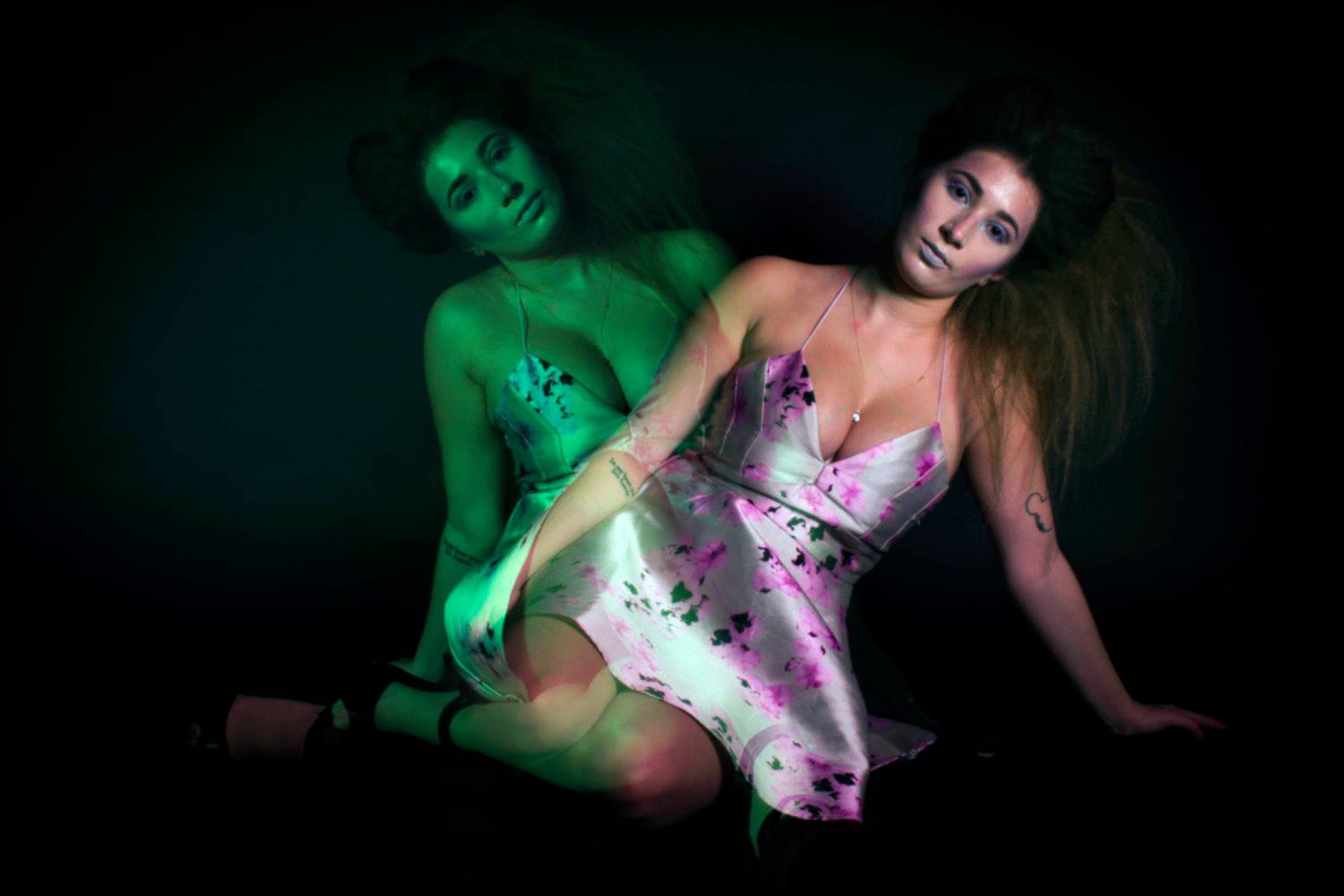
I collaborated with my New Elizabethan partner Tara Page on this exciting shoot as I had learnt from my previous shoots outside class that with the short amount of time the students give you it is very helpful to have a right-hand man! It was decided I would create the makeup design and Tara was the hair stylist. The photographer Molly sent me over a mood board of modern clown interpretations and advised she wanted a subtle look incorporating the colours of the dresses the model was going to wear (silver, purple and blue). I ran the face chart by Molly and she was happy to go ahead with my look. I wanted to create a pale but natural complexion and use unusual colours to contour and colour the face. This was an intriguing photography project involving double exposure (Tara and I got stuck in with helping the lighting set ups and flashing the bulbs when needed!) and I throughly enjoyed working with Tara again and Molly was a fantastic leader for the shoot. Photographer and Editor: Molly Mears Model: Samantha Noakes Makeup: Ellie Nevill Hair: Tara Page
During Queen Victoria's reign in England (1837-1901), beauty remained natural and almost makeup-free. Queen Victoria declared makeup as vulgar and that a pale, virtuous look was much preferred. Undetectable makeup was the trend and 'obvious rouging was seen as belonging to the realms of the theatre or signifying a woman of what was euphemistically phrased "low morals"' (Eldridge 2015). Women of high status would be dressed in high-waisted dresses "appeared light-boned and pretty, acting as a perfect foil for the handsome masculinity of her escort". The preference for youthful, virginal beauty mean that women would cosmetics which would artificially colour their complexions. Rouge and powder were applied sparingly with a hare's foot or a camel hair brush so they were barely noticed. "The Victorian ideal of feminity depended on an untouched, childlike appearance, soft ringlets and a virtuous manner" (Gunn 1973). "Fair skin and a lily-white hand were de rigueur to distinguish a lady from the weather-beaten working classes" (Marsh, 2009) and so concoctions made from sour milk, rain water, lavender and horse radish were designed to prevent sunburn or freckling. Harmful mixtures of the eighteenth century were replaced with herbs, flowers and oils and instead of using chemicals or poisons to promote healthy skin, women were advised to sit in well ventilated rooms, get seven to eight hours of sleep each night.
References:
Caitlin, L. (2015). Beauty, Bathing & Being a Victorian Era Woman.Available: http://www.xovain.com/makeup/victorian-era-beauty. Last accessed 6th February.
Lisa Eldridge. 2015. Face
Paint – The Story of Makeup. USA: Abrams Image.
Fenja Gunn. 1973. The
Artifical Face. United Kingdom: David & Charles (Holdings) Ltd.